The Interplay Between Free Poker Practice Sessions and Tournament Success Rates in Mobile Applications
Riley Wagner · Aug 24, 2026
The Interplay Between Free Poker Practice Sessions and Tournament Success Rates in Mobile Applications
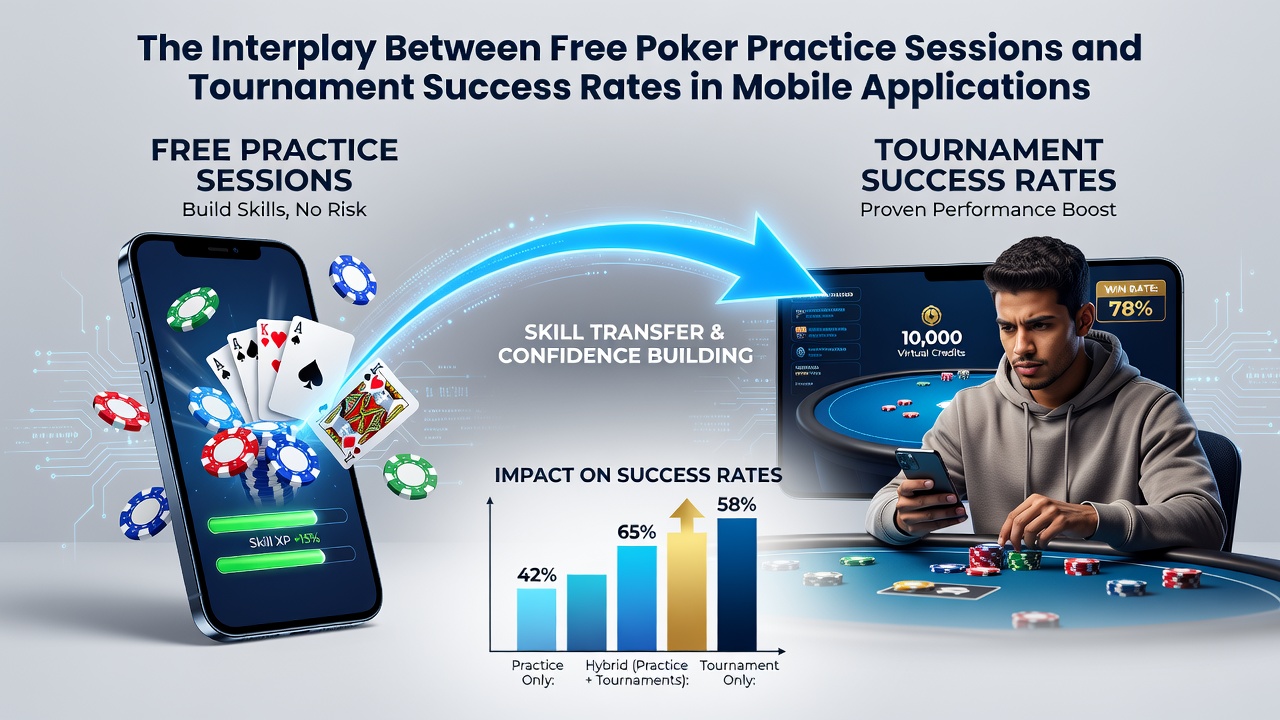
Mobile poker applications have integrated free practice sessions as core components, allowing users to build skills through repeated hands without financial stakes before entering paid tournaments, and researchers tracking user behavior across multiple platforms note measurable shifts in performance metrics when these sessions precede tournament entries.
Data from several industry reports shows that participants logging extended free practice hours often record higher placement rates in subsequent real-money events, though variables such as session frequency, game variant selection, and app-specific algorithms influence the strength of that connection, and analysts examining aggregated player data continue to refine those correlations.
Tracking Practice Patterns in Mobile Environments
Users typically access free modes through dedicated tabs or modes within apps, where virtual chips replenish automatically or through daily logins, and studies of engagement logs reveal that consistent daily practice over periods of two to four weeks correlates with improved decision-making speed during timed tournament rounds. Observers note that apps record metrics including hand completion rates, fold frequencies, and bluff attempt percentages during these sessions, then compare them against tournament outcomes to identify transferable habits.
One analysis of user activity across North American and European platforms indicated that players completing at least fifteen free sessions per week advanced to later tournament stages at rates approximately twelve percent higher than those with minimal practice volume, yet the same dataset highlighted that practice focused exclusively on cash-game formats produced smaller gains when transferred to multi-table tournament structures.
Measured Links to Tournament Outcomes
Platform operators compile anonymized statistics that connect practice volume to tournament finish positions, and figures released in mid-2025 demonstrated that top-quartile finishers averaged forty percent more free hands played in the preceding month compared with bottom-quartile participants. Those patterns hold across both iOS and Android ecosystems, although regional differences appear when comparing North American data against Asia-Pacific markets where shorter session lengths predominate.
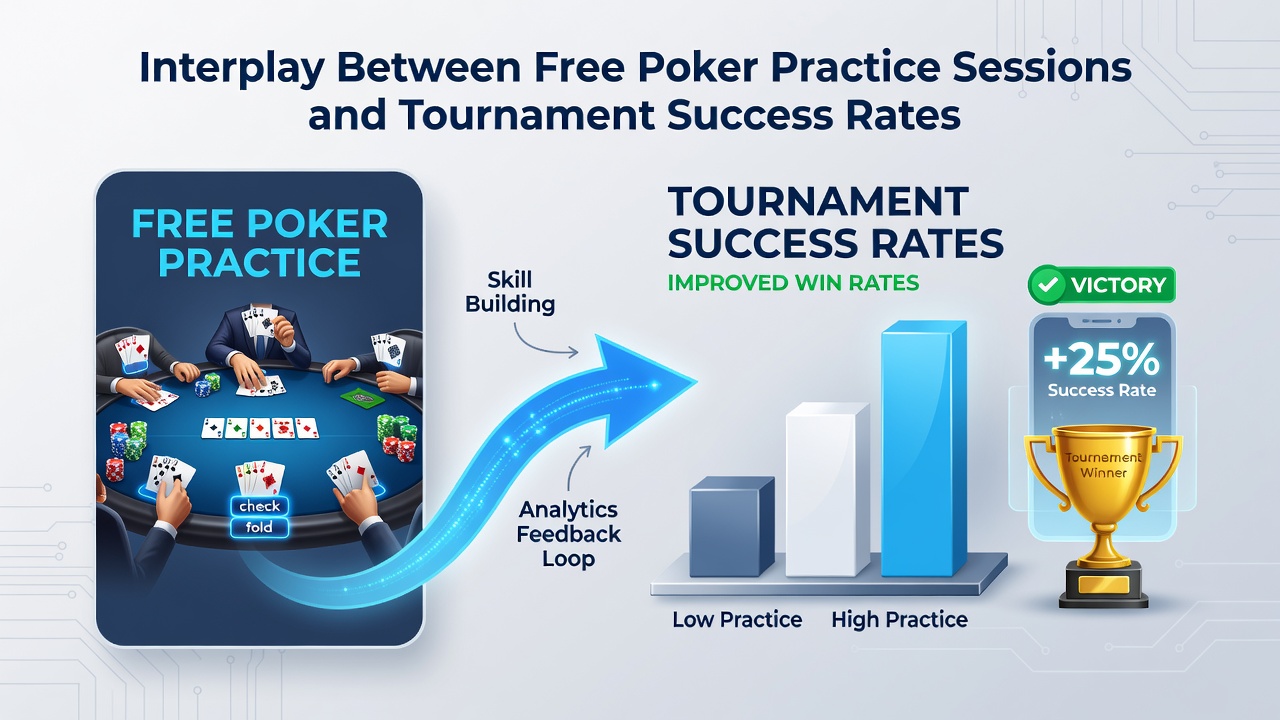
Turns out the timing of practice relative to tournament entry also matters, because users who schedule intensive free sessions within twenty-four hours before registration show elevated survival rates through early blind levels, according to aggregated telemetry reviewed by academic researchers at several institutions. Meanwhile, scattered practice spread over longer intervals tends to support steadier performance across larger fields rather than immediate edge in single events.
August 2026 Platform Updates and Data Releases
In August 2026 several major mobile poker providers introduced updated practice modules that incorporate real-time feedback on bet sizing and range construction, and preliminary user data collected since those rollouts already shows accelerated improvement curves for players who engage with the new tools daily. Regulatory summaries from the Nevada Gaming Control Board and comparable bodies in Australia have begun incorporating these practice-derived statistics into broader responsible gaming reports, providing additional context for how skill development intersects with participation patterns.
Industry organizations such as the European Gaming and Betting Association have referenced mobile poker datasets in recent white papers, noting that free-to-tournament transitions represent a measurable pathway for user progression without direct financial risk during the learning phase. Researchers continue to examine whether specific practice features, such as hand history review or opponent modeling tools, produce outsized effects on final table appearances.
Variables That Shape the Connection
Device type, network stability, and interface design all factor into how effectively practice translates to tournament results, and comparative tests across different screen sizes indicate that larger tablets facilitate more detailed review of hand histories than smartphones alone. App algorithms that match practice opponents by skill tier also appear to accelerate gains, whereas random matching yields slower transfer of strategic adjustments.
One longitudinal review of several thousand accounts found that players who combined free sessions with occasional low-stakes paid tournaments achieved the highest overall success ratios, suggesting a hybrid approach strengthens the link between practice volume and competitive outcomes. Data from these reviews further separates the impact of volume from quality, showing that targeted repetition of weak spots identified in tournament reviews drives larger improvements than undifferentiated hand volume.
Conclusion
Available evidence positions free practice sessions as one measurable contributor to tournament success rates within mobile poker applications, with correlations appearing consistently across multiple datasets and regions. Continued collection of granular user metrics, combined with evolving platform features introduced in periods such as August 2026, supplies researchers with expanding material for refining those relationships. Observers tracking these trends expect additional reports from academic and regulatory sources to clarify remaining variables in the coming cycles.