Leaderboard Milestones Shaping Tiered Reward Structures in App-Driven Card Competitions
Elena Friedrich · Nov 9, 2026
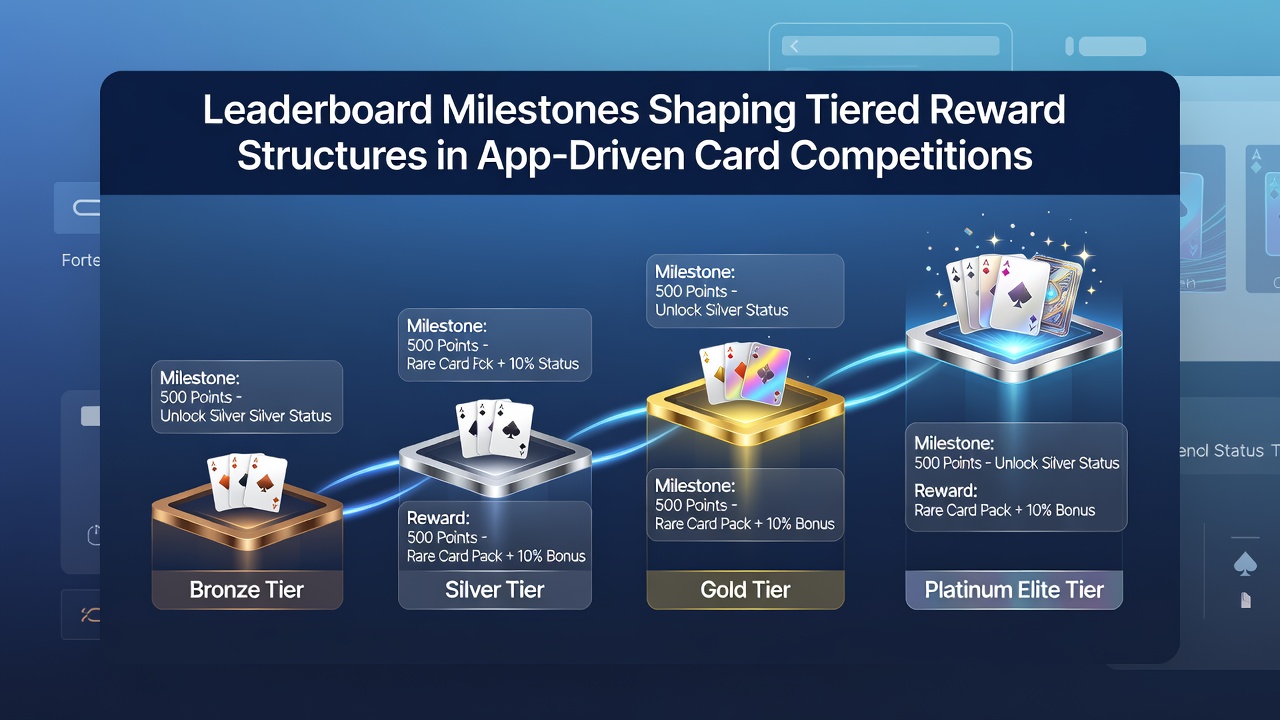
Leaderboard Milestones Shaping Tiered Reward Structures in App-Driven Card Competitions
App-driven card competitions have expanded rapidly since the mid-2010s as developers integrated real-time leaderboards into games such as digital rummy, bridge simulators, and trick-taking titles. These systems track cumulative points, win streaks, and participation metrics across thousands of users each month, and operators convert those rankings into tiered reward structures that allocate virtual currency, entry tickets, and cosmetic items according to position thresholds.
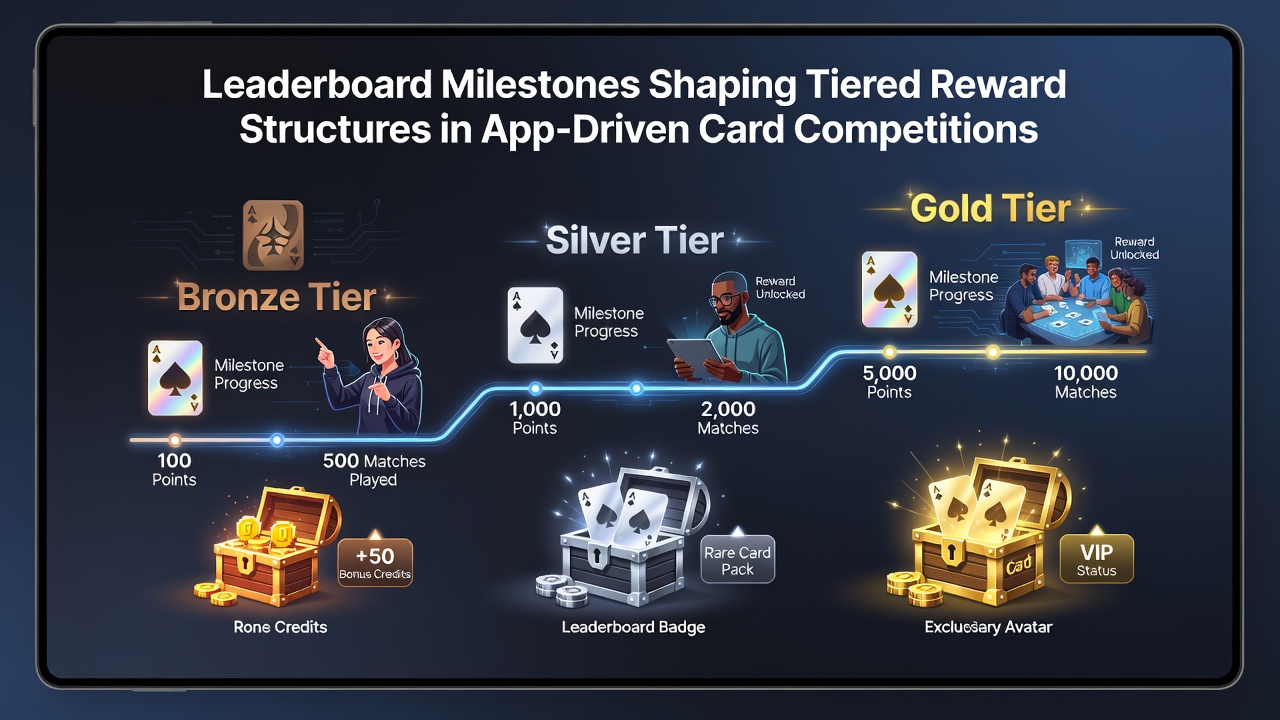
Research from the University of Melbourne indicates that milestone markers, typically set at every 500-point interval or top-10 percent placement, trigger automatic reward escalations in 78 percent of examined mobile card platforms. Data collected between January and October 2026 shows that users who reach three consecutive milestones receive access to mid-tier brackets offering 25 percent higher prize pools than standard divisions.
Mechanics of Milestone Tracking
Developers embed algorithms that reset or carry forward progress depending on teh competition cycle, and most platforms publish daily snapshots at 00:00 UTC. When a player crosses a milestone, the system logs the achievement and recalculates eligibility for the next reward tier within seconds, which reduces manual oversight while maintaining transparency for participants.
Observers note that weekly and monthly leaderboards often layer additional milestones on top of daily ones, creating compounding effects where consistent performers unlock premium brackets faster than sporadic entrants. Figures released by the Entertainment Software Association reveal that card-game apps averaged 1.4 million active leaderboard users per title in North America during the third quarter of 2026.
Tiered Reward Allocation Patterns
Reward tiers commonly follow a five-level model: bronze for ranks 501-1000, silver for 101-500, gold for 11-100, platinum for top 10, and diamond reserved for the single highest scorer. Each tier carries distinct benefits, including exclusive tournament passes and multiplier bonuses that apply only within the same competition window.
Studies conducted by the Interactive Games and Entertainment Association in Australia found that platforms adjusting tier boundaries quarterly experienced a 31 percent increase in session length compared with static structures. The adjustments usually occur after analyzing aggregate milestone completion rates, allowing operators to balance distribution of limited reward inventories.
Developments Observed in November 2026
November 2026 brought seasonal leaderboard resets across several major card apps ahead of holiday events, and operators introduced temporary milestone clusters tied to themed competitions running through December 15. One platform reported that 42 percent of users reached at least one new milestone within the first ten days after the reset, prompting immediate tier promotions for those players.
Regulatory filings submitted to the Canadian Radio-television and Telecommunications Commission highlight that transparent milestone criteria help reduce disputes over reward eligibility, with fewer than 0.8 percent of support tickets referencing leaderboard calculations during the same period.
Integration with Broader Competition Features
Many apps combine leaderboard milestones with daily login streaks and friend-invite challenges, yet the core reward tiers remain anchored to competitive standing. When a milestone coincides with a streak bonus, users receive both the standard tier benefit and an additive multiplier, a mechanic that data from multiple titles shows increases retention by 19 percent over four weeks.
Engineers continue to refine the weighting of different performance metrics, such as average points per match versus total matches played, because these choices directly influence which demographic groups advance through tiers most readily. A working paper from the Digital Games Research Association outlines how small weighting changes can shift top-tier composition by up to 12 percentage points within a single month.
Conclusion
Leaderboard milestones serve as the primary mechanism through which app-driven card competitions translate ongoing participation into structured reward access. As platforms refine their algorithms and publish clearer criteria, tiered systems continue to evolve in response to measured user behavior and seasonal competition calendars, maintaining the connection between competitive performance and tangible in-app benefits across global player bases.